


Movement is one of the most ordinary experiences of human life. People walk, travel, climb, descend, relocate, return, search for opportunities, and move through changing circumstances. Yet movement can also carry deeper meanings related to effort, aspiration, uncertainty, adaptation, and the passage of time.
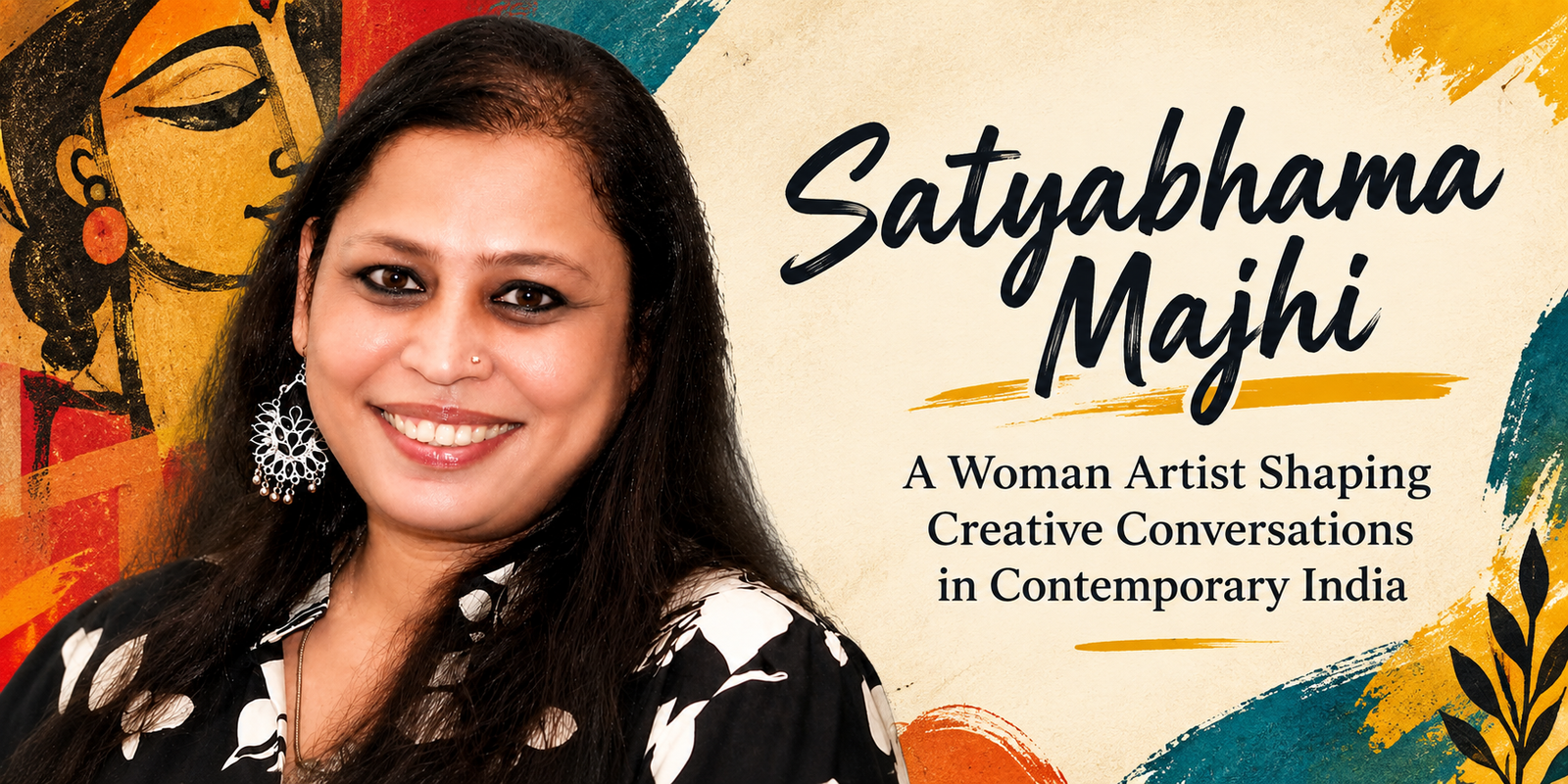
For Indian contemporary artist Satyabhama Majhi, movement becomes particularly meaningful when considered through her engagement with the landscape and everyday life of Niyamgiri. Her artistic response does not treat movement merely as physical action. It can also become a way of thinking about how people navigate their environments and their lives.
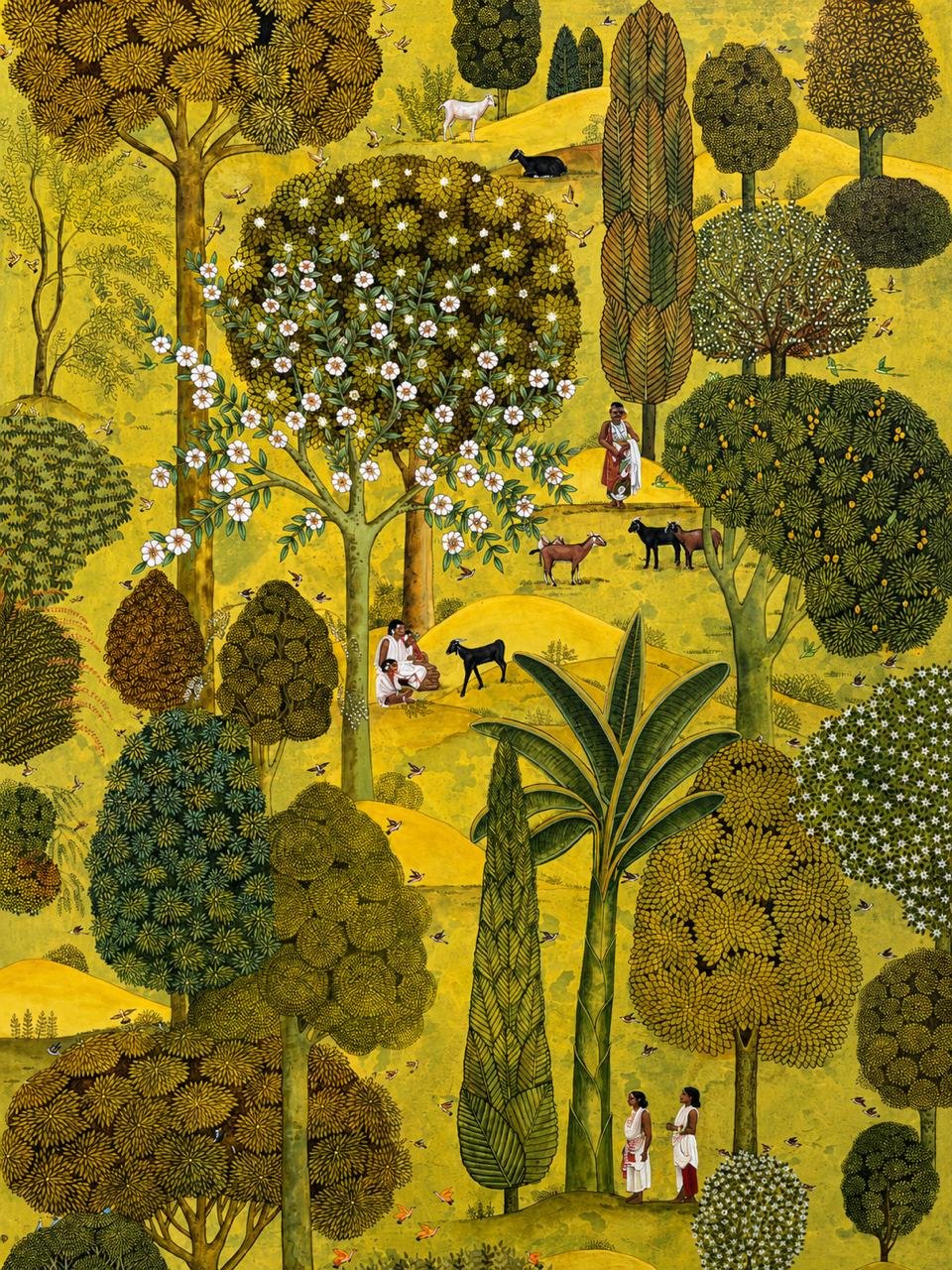
This perspective is especially visible in her work Up and Down, inspired by life in Niyamgiri. Through the simple experience of travelling uphill and downhill, Majhi explores a broader reflection on human movement and the pursuit of changing circumstances and opportunities.
The Everyday Nature of Movement
Movement is so deeply integrated into daily life that it can easily become invisible.
People walk to work, travel to markets, climb hills, carry materials, visit neighbours, attend school, and move between different parts of their communities.
These activities may appear ordinary.
For an artist, however, everyday movement can reveal relationships between people and their surroundings.
Majhi’s artistic practice often begins with precisely this kind of attention to ordinary experience.
Instead of searching only for dramatic events, she finds significance in the routines through which people experience their environments.
Niyamgiri as a Landscape of Movement
Niyamgiri provides an especially powerful context for understanding this idea.
The mountainous landscape influences how people move through their environment.
Going uphill and downhill is not simply a visual experience. It can be part of everyday activity and livelihood.
The physical demands of the landscape become part of daily life.
By observing this relationship, Majhi transforms a familiar activity into an artistic reflection.
The landscape is therefore not just scenery.
It becomes an active participant in human experience.
Understanding Up and Down
The work Up and Down draws inspiration from the repeated movement associated with life in Niyamgiri.
The title itself suggests opposing directions.
Up and down.
Rise and descent.
Effort and return.
Progress and repetition.
The physical movement can therefore be read as a metaphor for the broader journey of life.
Human circumstances are rarely completely stable. People move through different stages, challenges, opportunities, and uncertainties.
The simple action of climbing and descending can consequently become a visual reflection on these experiences.
Movement and Opportunity
One of the important ideas associated with Majhi’s interpretation is the pursuit of changing circumstances and opportunities.
Human beings frequently move because something is changing.
A person may travel in search of work, education, resources, social connection, or a better future.
Movement can therefore be associated with aspiration.
At the same time, movement can involve difficulty and uncertainty.
This complexity prevents the idea of movement from becoming simply a symbol of progress.
Sometimes moving forward involves returning, adapting, waiting, or changing direction.
The Physical and the Symbolic
Majhi’s work demonstrates how contemporary art can connect physical experience with symbolic meaning.
A person walking uphill is a literal image.
But the same movement can suggest effort.
Descending can suggest return.
Repeated movement can suggest routine.
Changing direction can suggest adaptation.
The artwork can hold all these possibilities without reducing the experience to one fixed interpretation.
This openness is characteristic of contemporary artistic thinking.
Landscape as Experience
Traditional landscape art often focuses on scenery.
Majhi’s approach allows landscape to become connected with human experience.
The mountains of Niyamgiri are meaningful not only because of their visual appearance but also because people live, work, travel, and maintain cultural relationships within that environment.
This perspective changes how landscape is understood.
It becomes lived space.
The mountain is not simply something to look at.
It is something people move through.
The Importance of Observation
The idea of movement in Majhi’s work is rooted in observation.
To recognise the artistic possibilities of uphill and downhill movement, the artist must pay attention to everyday life.
This connects with a larger characteristic of her practice.
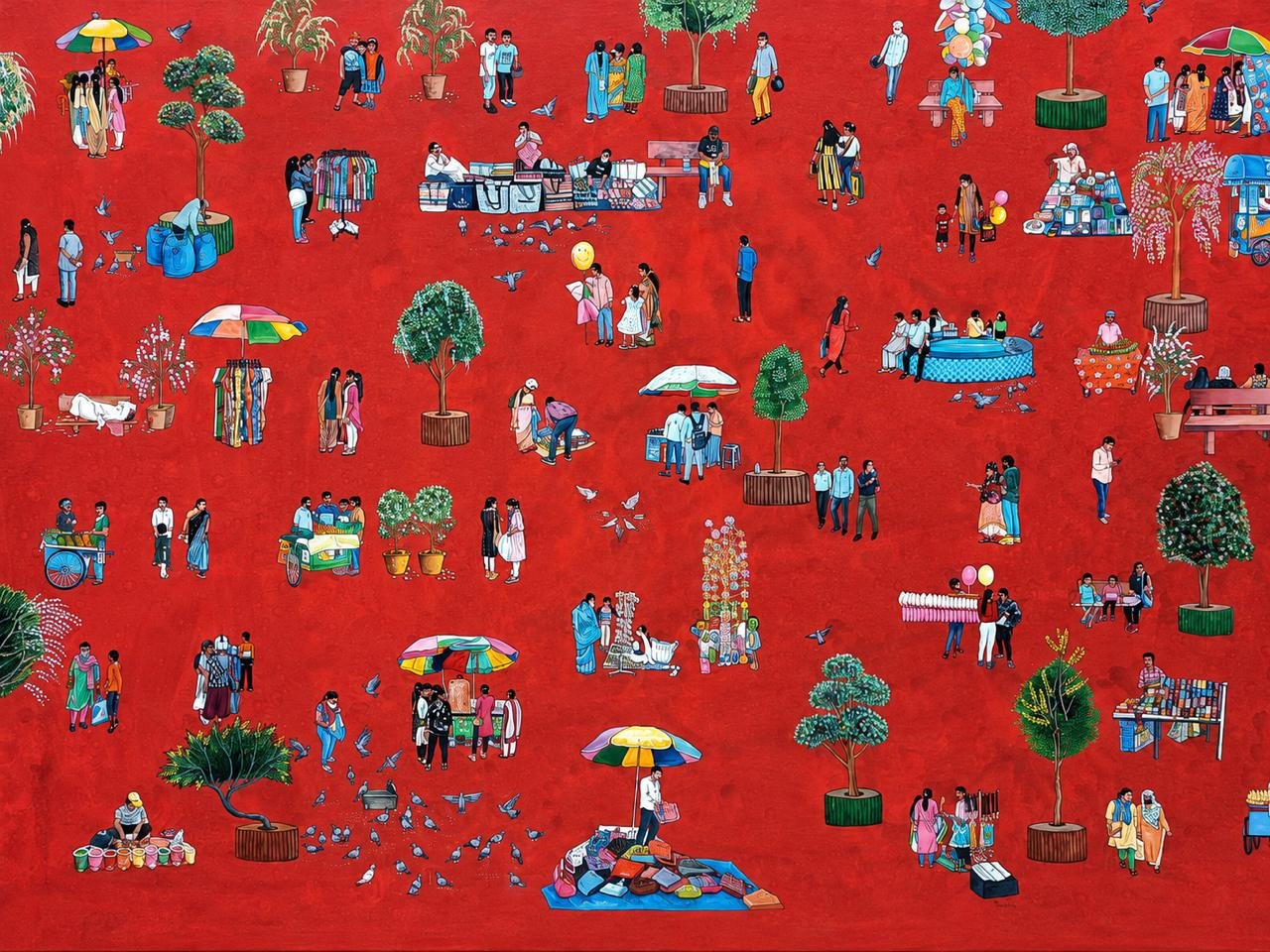
She observes communities, urban environments, children, landscapes, traditional practices, and public spaces before transforming those experiences into artistic ideas.
Observation allows ordinary experiences to become visible as subjects of creative reflection.
Movement and Cultural Understanding
Movement is also connected with cultural practices.
Communities develop ways of interacting with their environments based on geography, livelihood, traditions, and available resources.
In Niyamgiri, the relationship between people and the mountainous environment forms part of the broader cultural context.
Majhi’s sustained engagement with the Dongaria Kondh community has contributed to her understanding of these relationships.
Her approach is significant because it avoids reducing indigenous communities to picturesque subjects.
Instead, the emphasis is on lived experience and cultural context.
Beyond the Exotic Landscape
Indigenous landscapes are sometimes represented in art simply as exotic or visually unusual environments.
Majhi’s work offers a different possibility.
By focusing on everyday movement and livelihood, she draws attention to the ordinary realities within the landscape.
The mountains are beautiful, but they are also lived environments.
People have routines, responsibilities, relationships, and aspirations.
This human dimension makes the landscape more than an aesthetic object.
Repetition and Daily Life
The repeated journey uphill and downhill can also be understood through the idea of repetition.
Many forms of human activity are repetitive.
Daily routines are performed again and again.
Yet repetition does not necessarily mean that every day is identical.
Circumstances change.
People change.
Goals change.
The same physical journey can therefore carry different emotional or practical meanings at different times.
This relationship between repetition and change provides an interesting foundation for contemporary artistic interpretation.
Movement in Urban Life
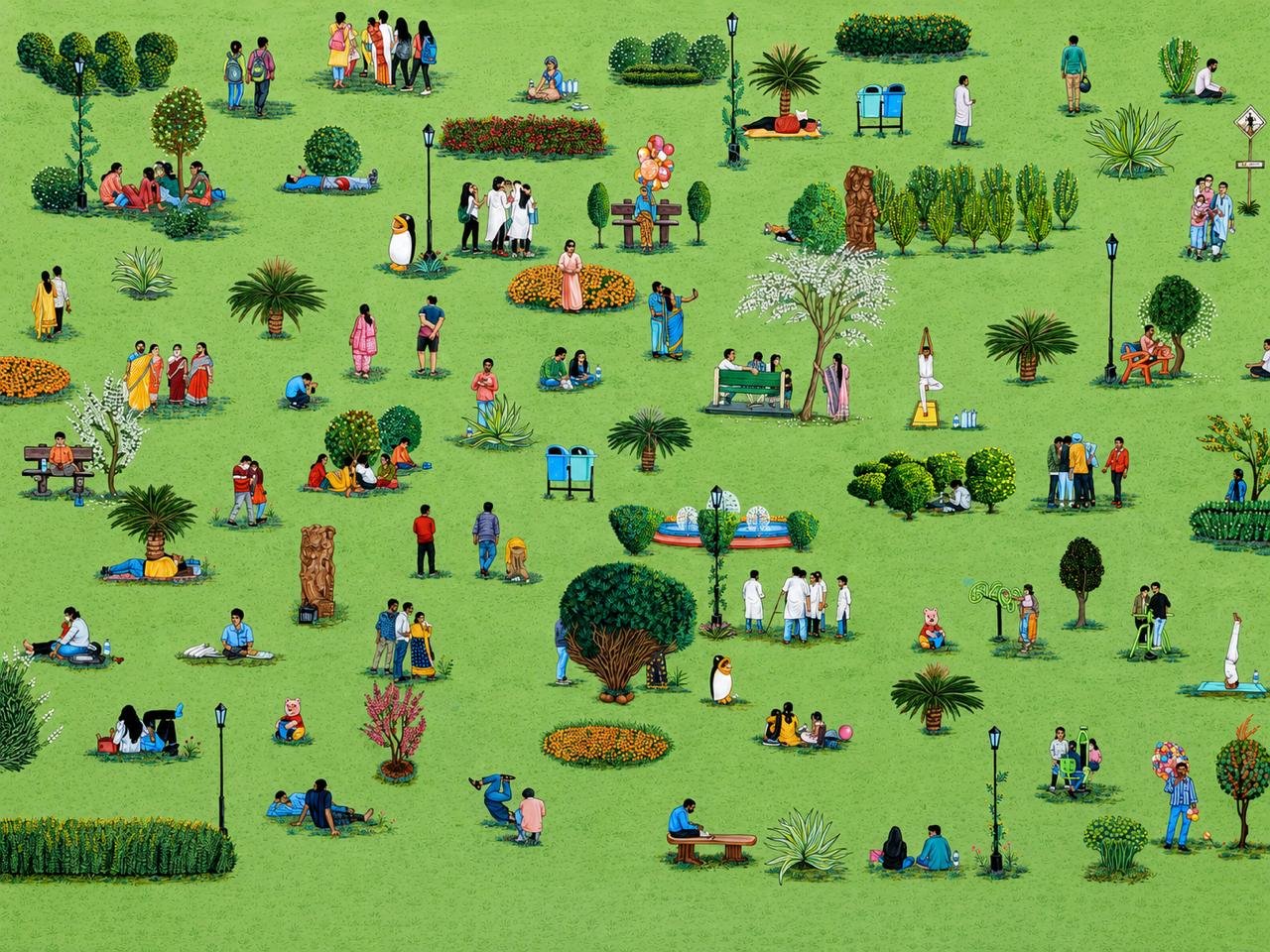
Although Up and Down is connected with Niyamgiri, the broader concept of movement can also be applied to urban life.
Cities are defined by movement.
People travel through roads, streets, neighbourhoods, public spaces, workplaces, and institutions.
Urban development changes these patterns.
New roads create new routes.
New buildings alter familiar environments.
Public spaces become places of gathering and movement.
Majhi’s interest in urban transformation therefore provides another context in which movement becomes relevant.
Movement Between Rural and Urban Worlds
Majhi’s artistic journey itself crosses different environments.
Her practice connects urban spaces such as Bhubaneswar and Cuttack with rural and tribal communities.
This movement between contexts allows different experiences to enter dialogue.
The city can raise questions about modernization and development.
Rural environments can reveal different relationships with land and community.
Tribal contexts can provide insights into indigenous knowledge and cultural relationships with nature.
The artist’s practice becomes a space where these experiences can interact.
Movement Through Artistic Media
Majhi’s multidisciplinary practice also involves movement between media.
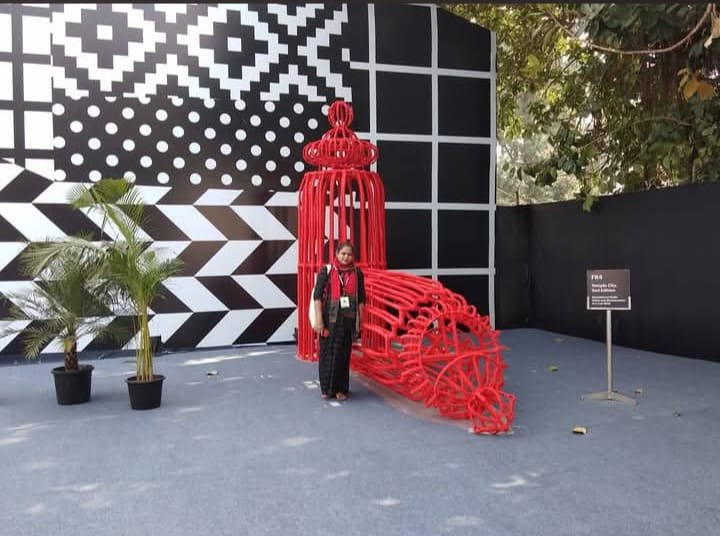
She works across painting, sculpture, installation, photography, mixed media, and public art.
Each medium provides a different way of expressing experience.
Painting can explore colour and composition.
Sculpture introduces physical form.
Installation changes the viewer’s relationship with space.
Photography can capture moments and environments.
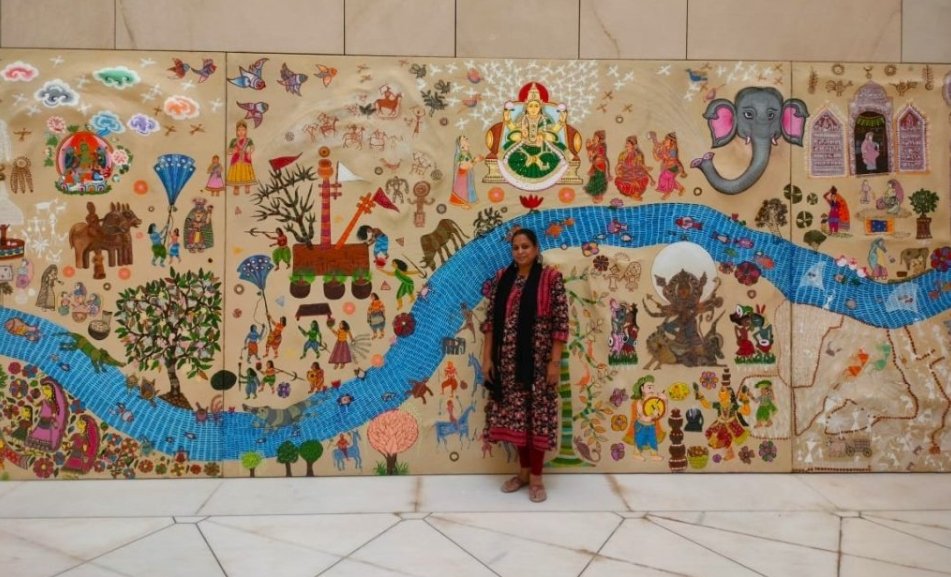
Public art places artistic expression directly into shared spaces.
Moving between these media allows an idea to be reconsidered from different perspectives.
Movement and Public Art
Public art introduces another form of movement: the movement of the audience.
A person encountering a mural is rarely standing still for a long period.
They may walk past it, see it from a distance, approach it, or encounter different sections at different moments.
The artwork becomes part of a moving environment.
Majhi’s public-art practice therefore connects visual art with the rhythms of everyday public life.
Movement and Children
Majhi’s art education work provides another perspective.
Children naturally explore their surroundings through movement.
They walk, play, observe, experiment, and respond to their environments.
Her workshops encourage children to draw from their own experiences rather than simply copy predetermined images.
A child’s journey to school, an experience in nature, a family activity, or an observed event can become creative material.
This approach reinforces the idea that movement and experience can be sources of artistic expression.
Movement as Adaptation
Human movement is also a form of adaptation.
People respond to changing environments.
They modify routines, discover new routes, develop new skills, and search for new possibilities.
Contemporary India is experiencing rapid social, economic, technological, and environmental change.
Art that considers movement can therefore engage with a larger question: how do people adapt while retaining connections with their memories and cultural identities?
Majhi’s work approaches this question through lived experience rather than abstract theory.
The Journey as Metaphor
The idea of a journey has long been important in art and literature.
But Majhi’s interpretation is grounded in ordinary physical experience.
The journey does not need to be dramatic.
It can be a repeated daily route.
It can involve going up and coming down.
It can involve returning to the same place.
It can involve moving through changing circumstances.
This makes the metaphor accessible while retaining conceptual depth.
Human Effort and Persistence
Movement also implies effort.
Walking uphill requires physical energy.
Repeating the journey requires persistence.
In this sense, the landscape becomes a reminder of human resilience.
People continue moving because everyday life requires it.
The artistic interpretation of this experience can therefore highlight persistence without turning the community into a symbol of hardship alone.
There is also agency, routine, knowledge, and adaptation.
The Relationship Between Place and Life
One of the broader lessons in Majhi’s work is that people cannot always be separated from the places they inhabit.
Landscape influences movement.
Movement influences routine.
Routine influences memory.
Memory contributes to cultural identity.
Cultural identity shapes how people understand their environment.
These relationships create a complex network that contemporary art can explore.
A Broader Contemporary Meaning
The idea of movement has relevance far beyond one landscape.
Modern life is increasingly mobile.
People move between villages and cities, between educational institutions and workplaces, and between different cultural environments.
Technology has also created new forms of movement through communication and information.
Yet physical landscapes continue to influence human lives.
Majhi’s work provides a reminder that even simple physical movement can reveal larger questions about how people live.
Conclusion
Satyabhama Majhi’s artistic engagement with movement demonstrates how an ordinary experience can become a meaningful contemporary subject.
Through Up and Down, the physical act of moving uphill and downhill in Niyamgiri becomes a reflection on human life, effort, routine, changing circumstances, and the pursuit of opportunity.
The work also reveals the importance of understanding landscape as lived space.
For the Dongaria Kondh community, the mountains are not merely scenery. They form part of everyday experience, livelihood, cultural knowledge, and movement.
Majhi’s approach gives this reality artistic attention without reducing it to an exotic image.
Her broader multidisciplinary practice expands the idea further. Movement exists in urban streets, public spaces, community projects, artistic media, educational experiences, and cultural exchanges.
Ultimately, her work suggests that a journey does not always have to take us somewhere completely new.
Sometimes, it is the repeated movement through a familiar environment that reveals the deepest stories.
The path upward and the path downward may look simple, but together they can become a powerful metaphor for the human journey—one shaped by effort, adaptation, memory, aspiration, and the constant movement of life itself.